North Texas sun is relentless. Shingles cook on dark, heat-absorbing roofs and age faster than they should. Cool roof systems change that equation. By reflecting sunlight and releasing stored heat, these systems help shingles run cooler, resist UV damage, and keep their protective granules in place longer. The result is a roof that holds up better under Rockwall summers, supports energy efficient roofing goals, and reduces maintenance over the long run.
SCR, Inc. General Contractors brings practical, field-tested strategies to homes and businesses across Rockwall County. The team focuses on solutions that perform in triple-digit heat, hail seasons, and fast temperature swings from storms. This article explains how cool roof systems extend the life of shingles, when they make sense for Rockwall properties, and the options that fit both residential neighborhoods and commercial buildings near Lake Ray Hubbard.
Why shingles fail faster in North Texas
Asphalt shingles do well when they stay within a stable temperature range. In Rockwall and nearby Heath, that rarely happens. Roof surfaces run 50 to 60 degrees hotter than the ambient air on dark roofs at mid-day. That temperature spike drives several failure modes.
UV radiation dries out asphalt binders and makes the mat brittle. Granules shed into the gutters and thin the UV shield. Thermal shock from rapid heating and cooling after afternoon storms opens microcracks. Over time, those microcracks spread, allowing wind-driven rain to penetrate. Add high humidity, and you see adhesion loss around flashing and penetrations.
Homeowners in Northshore, Stone Creek, and Breezy Hill often describe the same symptoms after a couple of brutal summers: curling tabs, soft spots near vents, and a steady trickle of granules after every rain. A cool roof strategy reduces the heat load that drives those problems.
What a cool roof system does for shingles
A cool roof system is any roof assembly that increases solar reflectance and thermal emittance. In plain terms, it bounces more sunlight away and releases heat faster. On a shingle roof, this can mean selecting reflective shingles, adding a high-reflectance coating approved by the manufacturer for the specific shingle type, or improving the assembly with vents and insulation upgrades that keep deck temperatures lower.
Lower surface temperatures lead to slower aging. The asphalt stays pliable longer. Granules remain embedded. Sealant lines around flashing hold longer. The deck and underlayment expand and contract less between day and night, so nails stay set and shingles remain flat.
Field measurements in Rockwall show temperature reductions on reflective surfaces of 20 to 40 degrees compared to dark shingles at peak sun. That temperature drop is the difference between shingles creeping toward failure and shingles that last their rated service life. It also helps reduce attic heat gain, which supports energy efficient roofing goals by easing load on the cooling system.
Residential options that actually work
Not every “white paint” solution belongs on a shingle roof. Coatings must be compatible with asphalt chemistry and not block vapor release. SCR, Inc. approaches homes in Rockwall 75087 and lakefront areas in 75032 with three proven pathways, selected after a roof assessment and attic check.
- High-reflectance shingles. Several mass-market brands like GAF and Owens Corning offer shingles with CRRC-rated granules that boost reflectance without changing the look of the roof. These work well in HOA neighborhoods like Buffalo Creek, where neutral palettes are preferred. The roof looks like a standard architectural shingle but runs cooler. Ventilation and deck upgrades. In many homes near The Harbor and Chandlers Landing, the attic is the bottleneck. Adding balanced intake at the eaves and a ridge vent, then improving insulation with polyisocyanurate (polyiso) board at the deck in re-roof scenarios, reduces deck temperature and smooths daily swings. The shingles benefit, and the HVAC system breathes easier. Compatible reflective treatments. Some asphalt shingles can accept manufacturer-approved acrylic or silicone-modified top layers on accessory areas, such as low-slope transitions or porch tie-ins. These spot treatments protect vulnerable zones without risking shingle warranty conflicts.
Each choice depends on roof slope, attic design, shade patterns from trees, and HOA requirements. The goal stays the same: bring peak temperatures down and slow UV wear.
Why this matters for energy use and comfort
Shingle protection and energy savings go hand in hand. A cooler roof transmits less heat into the attic. Attics that stay closer to ambient reduce duct losses and keep supply air colder. Rooftop AC units and heat pumps on commercial buildings, and attic air handlers in homes, cycle less often. Less cycling means fewer start-up stress events, fewer capacitor failures in July, and a longer service life.
In Rockwall, a home with a reflective roof and tuned ventilation can see summer cooling loads drop by 10 to 20 percent, based on attic thermography and bill comparisons across similar floor plans. The variance depends on shade, duct location, and window exposure. For homes along Lake Ray Hubbard with broad western exposures, the gain is noticeable on late afternoon comfort and on the monthly bill.
Commercial cool roof systems in Rockwall
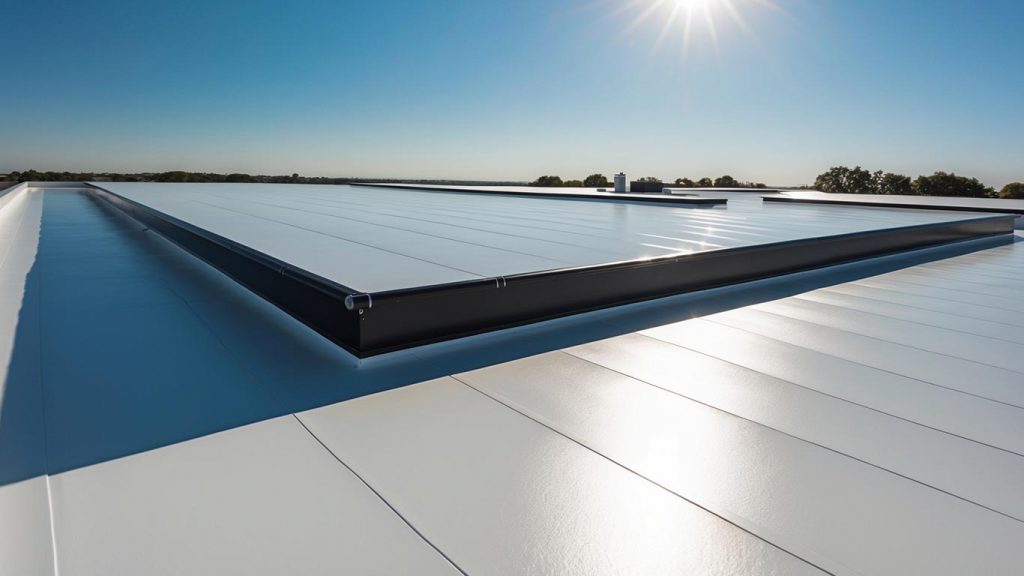
Commercial properties see the biggest swing from cool roof systems. Large, low-slope roofs near the I-30 corridor and The Harbor Rockwall face extreme solar radiation that drives HVAC costs through the roof. Black or dark membranes absorb up to 90 percent of solar heat. Inside, rooftop AC units fight higher intake air temperatures and short cycle during peak hours.
SCR, Inc. deploys reflective systems that focus on both solar reflectance and thermal emittance. Teams use high-solids silicone coatings, reinforced TPO membranes, and white PVC systems to create a seamless barrier against the Texas sun. The combination cuts rooftop temperatures, reduces the ambient heat around RTU units, and stabilizes interior conditions in warehouses, retail centers, and office complexes.
Where the existing roof is dry and structurally sound, roof restoration with an elastomeric or silicone membrane can extend service life by 10 or more years while improving reflectivity. On aging or saturated roofs, a new single-ply TPO or PVC system over a clean substrate with polyiso insulation delivers a long-term fix and measurable energy savings.
The science that protects shingles
Two properties drive performance: solar reflectance and thermal emittance. Solar reflectance measures how much sunlight the roof surface reflects. Thermal emittance measures how efficiently the surface releases absorbed heat as infrared energy. High scores in both categories mean the roof stays cooler through the hottest hours and sheds heat faster after sunset.
On shingle assemblies, reflectance begins at the surface. CRRC-rated shingles use bright mineral granules that reflect more light without appearing stark white. Under the surface, added polyiso insulation reduces heat transfer to the deck, which eases expansion cycles. Ventilation moves trapped heat and moisture out of the attic, which protects the deck and the shingle underside. Together, these choices control temperature in a way that preserves the asphalt binder and keeps shingles stable.
Materials and components that make a difference
For commercial cool roof systems, SCR, Inc. uses elastomeric coating chemistries that stand up to UV and ponding water. Acrylic coatings are cost-effective and bright, suited to roofs with positive drainage. High-solids silicone membranes resist UV and tolerate ponding, a common issue near scuppers on older buildings. Primers improve adhesion to aged substrates, and seam tape reinforces transitions and field seams before coating.
New single-ply systems use white TPO or PVC membranes from trusted brands. TPO offers strong welds and good reflectivity, while PVC adds chemical resistance, helpful for restaurants or facilities with rooftop grease vents along the I-30 retail stretch. Expanded polystyrene (EPS) and polyiso boards build slope and improve R-value under the membrane. Flashing details, boots, and term bars lock in edges where wind and rain test the system first.
On homes, accessory improvements like reflective drip edges, high-temperature underlayments, and breathable synthetic felts support temperature control and durability. Good details around skylights, pipe boots, and step flashing prevent hot spots and leaks that accelerate shingle wear.
Local conditions that push cool roof ROI
Rockwall sits on the eastern shore of Lake Ray Hubbard, where open water increases reflected sunlight in late afternoons. Buildings near The Harbor and San Jacinto Plaza take extra heat exposure in summer. The urban heat island effect adds to rooftop temperatures in paved commercial zones. Hail events, while sporadic, stress shingle mats already weakened by heat aging. All of this favors reflective, energy efficient roofing to lower the baseline temperature and protect the assembly.
For businesses in Rockwall 75087 and 75032, the utility impact shows up fast. Cooling dominates annual energy spend. A cool roof trims peak demand charges and cuts run-time on rooftop units. SCR, Inc. has measured rooftop temperature drops of 30 degrees on coated systems in August sun. That drop keeps RTU compressors from overworking and extends the lifespan of fans and motors.
Where cool roofs shine and where they need caution
Cool systems excel on sun-exposed, low-slope roofs and on steep-slope homes with limited shade. They provide the most value on west and south exposures. They deserve extra review on roofs shaded by energy efficient roofing large oaks or pines where algae streaking is common, because reflective surfaces can show growth sooner. In those cases, using algae-resistant granules and planning a light, periodic wash keeps the roof clean and performing.
On historic homes or strict HOAs, reflective shingles in earth tones maintain curb appeal while delivering tangible temperature benefits. For very dark color requirements, ventilation and insulation upgrades still move the needle on heat control, even without a bright surface.
How cool roof systems extend shingle life in practice
Consider a two-story home in the Shores on Lake Ray Hubbard with a standard architectural shingle roof installed ten years ago. Summer attic readings reached 140 to 150 degrees by late afternoon. After replacement with a CRRC-rated shingle, added ridge venting, and improved soffit intake, attic temperatures settled closer to 120 degrees on similar days. The homeowner reported fewer AC cycles and quieter evenings as thermal expansion noises dropped. Granule loss in gutters decreased over the next year. That is the kind of durability shift that adds years to a shingle roof.
On a one-story retail strip near the I-30 corridor, a silicone roof restoration over a weathered modified bitumen surface cut rooftop temperatures by about 35 degrees. Infrared scans showed fewer hot spots over the deck, and the tenant’s RTU runtimes fell during peak hours, verified by building automation logs. The owner avoided a tear-off and gained a renewable warranty path.
Brands, standards, and warranties that matter
Materials matter in the North Texas climate. SCR, Inc. installs systems from GAF, Owens Corning, CertainTeed, and Mule-Hide for steep-slope and low-slope applications. For high-end PVC systems, Duro-Last and Carlisle SynTec bring factory controls and strong reflectance data. Duro-Last’s “World’s Best Roof” PVC system has a track record for leak protection and energy savings on large commercial footprints.
Project specs align with CRRC ratings for reflectivity and emittance. Where applicable, Energy Star certified products reinforce energy efficient roofing goals. For single-ply membranes, NDL (No Dollar Limit) warranties from factory-certified programs support long-term performance. On the trust side, SCR, Inc. is BBB accredited, carries GAF Master Elite credentials, and maintains Insurance Claim Specialists for hail and wind events, with former insurance adjusters on staff to support documentation.
Where SCR, Inc. works in Rockwall County
Teams serve commercial property owners across Rockwall 75087 and the 75032 lakefront communities. Crews are active along the I-30 corridor and around The Harbor Rockwall. Work spans retail roofs in Northshore, office parks in Buffalo Creek, and industrial buildings in Fate and Heath. Neighboring service areas include Rowlett, Royse City, Forney, Terrell, Wylie, Garland, and Greenville. The company understands access, staging, and permitting in each zone, which keeps projects on schedule.
How coatings, TPO, and PVC compare for longevity and shingle protection
While shingles sit mostly on steep slopes, many properties mix roof types. A two-story office may have shingle mansards with a low-slope core at the center. A well-planned system uses reflective membranes on the low-slope sections and reflective shingles on the slopes. This keeps the whole roof assembly cooler. The shingle sections benefit from reduced heat radiating off the membrane and from lower attic temperatures, especially when the conditioned space opens to the central core.
Acrylic coatings deliver bright reflectivity at a lower installing energy efficient roofing cost. They prefer roofs with solid drainage and minimal ponding. Silicone coatings thrive where ponding water occurs, such as near scuppers and long gutters on older buildings. TPO brings a balance of cost, weldability, and reflectance. PVC adds chemical resistance, valuable for restaurants and labs. Each system can include polyiso insulation to push R-values higher and smooth thermal swings that stress shingles on adjacent slopes.
The inspection that reveals heat stress
Before recommending a solution, SCR, Inc. performs a Thermal Roof Inspection using infrared thermal cameras, visual checks at penetrations, and moisture probing where needed. On commercial buildings, this pinpoints wet insulation, open seams, and areas where RTUs bake the surface. On homes, the team checks soffit intake, ridge vent continuity, duct layout, and deck condition. The report identifies where the roof loses energy and where cool roof components will add the most value.
Property owners can request this inspection at no cost. It sets a baseline for energy and durability improvements and helps decide between restoration and replacement.
Quick answers to common questions
Does a cool roof really lower air conditioning bills in Rockwall? Yes. Reflective surfaces and better emittance reduce roof and attic temperatures. Expect meaningful drops in peak cooling demand and steadier indoor comfort. Results vary with shade, attic design, and duct placement.
What is the ROI on a reflective coating versus a full replacement? Restoration with silicone or acrylic often costs less upfront and can extend life 10 or more years when the substrate is dry. A full TPO or PVC replacement with insulation upgrades costs more initially but can deliver larger energy savings and longer warranties. SCR, Inc. provides side-by-side payback estimates based on utility data and roof condition.
Are there local or Texas incentives for energy efficient roofing? Incentives change over time. Some utilities offer rebates for insulation upgrades or reflective roofs on commercial buildings. Certain federal tax provisions may allow accelerated depreciation on commercial roofs. The team reviews current programs during the inspection and provides documentation for applications.
Do reflective shingles look bright white? No. Many CRRC-rated shingles use light gray, weathered wood, or tan granules that fit common HOA palettes while improving reflectance.
Will a cool roof cause winter heating penalties? In North Texas, cooling dominates the annual load. Any small winter penalty is typically offset many times by summer savings and longer roof life.
What to watch for during installation
Quality of details determines whether a cool roof performs as promised. On membrane systems, seams, terminations, and flashing need clean welds and proper primers. On coating projects, surface prep controls adhesion. This includes pressure washing, repairs with compatible mastics, seam reinforcement, and correct dry-film thickness. On shingle projects, balanced ventilation and sealed penetrations preserve the temperature gains and protect against wind-driven rain.
SCR, Inc. documents these steps with photos and provides warranty paperwork upon completion. As a member of The Good Contractors List, the company carries a $10,000 quality guarantee that supports accountability from start to finish.
How to decide your next step in Rockwall
If a roof shows heat stress, granule loss, or high attic temperatures, the answer may be simpler than a full tear-off. A cool roof system can extend shingle life, improve comfort, and trim energy costs. For commercial properties, reflective membranes or restorations can stabilize operations and support predictable budgets through North Texas summers.
Request a free Thermal Roof Inspection. The team will map hot spots, check drainage and ventilation, and provide a clear path forward. For properties near Lake Ray Hubbard, around San Jacinto Plaza, or along the I-30 corridor, SCR, Inc. can deploy quickly and present options that match the site: reflective shingles, ventilation and insulation upgrades, elastomeric or silicone coatings, or new TPO and PVC systems with NDL warranties.
Beat the Texas heat and protect your investment. Ask for your free energy audit and quote, compare options, and choose a cool roof plan that keeps shingles stronger, longer.
SCR, Inc. General Contractors provides roofing, remodeling, and insurance recovery services in Rockwall, TX. As a family-owned company, we handle wind and hail restoration, residential and commercial roofing, and complete construction projects. Since 1998, our team has helped thousands of property owners recover from storm damage and rebuild with reliable quality. Our background in insurance claims gives clients accurate estimates and clear communication throughout the process. Contact SCR for a free inspection or quote today.
SCR, Inc. General Contractors
440 Silver Spur Trail
Rockwall,
TX
75032,
USA
Phone: (972) 839-6834
Website: https://scr247.com/, Storm damage roof repair
Map: View on Google Maps
Social Media: Yahoo Local